Home / Does Your Stone Countertop Need Sealing? A Simple Water Test
Does Your Stone Countertop Need Sealing? A Simple Water Test
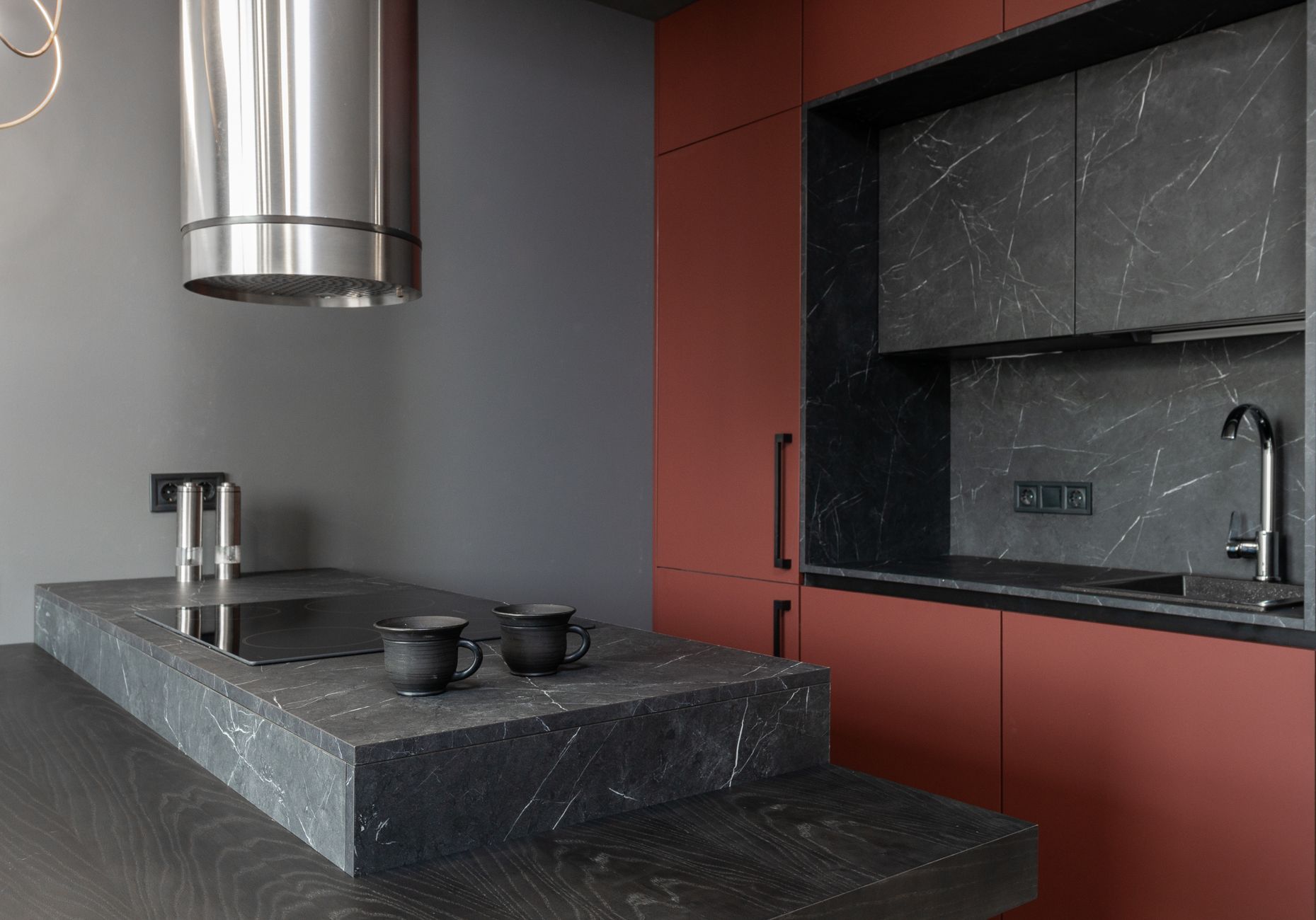
Stone is porous to some degree, and a sealer fills those tiny openings so liquids sit on the surface long enough to be wiped up. Not every stone needs the same attention, though, and sealing on a fixed calendar wastes time. A quick test tells you what your own counter needs.
The water drop test
Choose a clean, dry spot away from the sink. Place a teaspoon of water on the stone and start a timer. Watch how the water behaves and how the stone looks once you wipe it away.
- Water beads and stays round for fifteen minutes or more: the sealer is working and you can leave it alone.
- Water spreads out and the stone darkens after several minutes: the seal is wearing thin and it is time to reseal.
- The stone darkens within a minute or two: the surface is essentially unprotected, and sealing should happen soon.
Repeat the test in two or three places. Areas near the stove and sink wear fastest, so a counter can pass in one corner and fail in another.
Which materials need it
Dense granite often absorbs very little and may go years between sealings. Marble, limestone and many lighter, softer stones absorb readily and benefit from regular checks. Quartzite varies widely, so test it rather than guessing. Engineered quartz is made with resin and is nonporous, so it is not sealed at all, and applying a sealer to it only leaves a hazy layer.
Why Riverside kitchens are hard on sealers
Hot summers and constant air conditioning cycles dry a kitchen out, and very hard water leaves mineral film that wears at a sealer as it is scrubbed off. Cooking oil is the other test. Oil is the thing most likely to soak into an unsealed stone and leave a dark patch that is hard to lift.
How to reseal
Clean the surface thoroughly and let it dry completely, ideally for a full day. Apply a penetrating sealer made for natural stone in a thin, even coat, following the label for the wait time. Wipe off every bit of excess before it dries, since leftover sealer turns into a sticky film. Keep the counter clear until the cure time on the bottle has passed, then run the water test again.
A sealer buys you time to wipe up spills. It does not make stone stain proof, and it does not prevent acid etching, which is a different kind of damage entirely.